

Insights /Risk & Insurance
Skilled-Trades Staffing: How Contractors Staff Welders, Electricians & Concrete Crews Without the Comp Risk
The danger in flexible trade labor isn't the worker — it's who carries the workers' comp and liability. Here's how the employer-of-record model keeps that exposure off your project.
Contractors & Plant Managers7 min read
Contractors staff welders, electricians, and concrete crews without taking on the workers' comp risk by using a specialist staffing agency as the employer of record. The agency hires the tradesperson, classifies the work correctly for workers' compensation, carries the comp and general-liability coverage that high-risk trades demand, and assigns the worker to your jobsite — you direct the work, but the insurance exposure stays with the agency. The catch is that the agency has to be built for the trades: a generalist light-industrial firm that places a welder or an electrician on a warehouse comp classification leaves a gap that lands back on your project. The comp classification has to match the actual work.
Where the real risk lives
Bringing flexible labor onto a jobsite feels like it's about the worker — will they show up, can they do the work. The bigger exposure is quieter: who carries the workers' compensation and general liability if a welder, electrician, or concrete finisher is hurt on your site.
Trade work is higher-risk than warehouse or office work, and workers' compensation is priced by job classification to reflect that. Get the classification or the coverage wrong and the liability doesn't disappear — it flows to whoever is left holding it, which can be your project.
How the employer-of-record model removes it
When a staffing agency places a tradesperson as the employer of record, it is the legal employer for payroll, taxes, workers' compensation, and general liability. You direct the work on site; the agency carries the employment risk.
Done right, that converts a fixed hiring-and-insurance commitment into flexible crew capacity. You scale a trade up for a push and back down when its scope wraps, without absorbing the comp and liability that come with carrying those trades on your own books.
Why a generalist agency is the hidden gap
The model only protects you if the agency insures the work for what it actually is. A generalist that staffs warehouse and clerical labor may not carry — or correctly classify — the comp and liability that a welder or a licensed electrician requires.
That mismatch is the gap. A specialist agency built around the trades classifies the work correctly and carries the right coverage, which is precisely why Precision Workforce exists as a separate, trades-focused company rather than a line item inside a general-labor agency. For the general light-industrial work, its sister company Lingo Staffing is the right fit; for the licensed and certified trades, the specialist is.
Trade by trade: welders, electricians, concrete crews
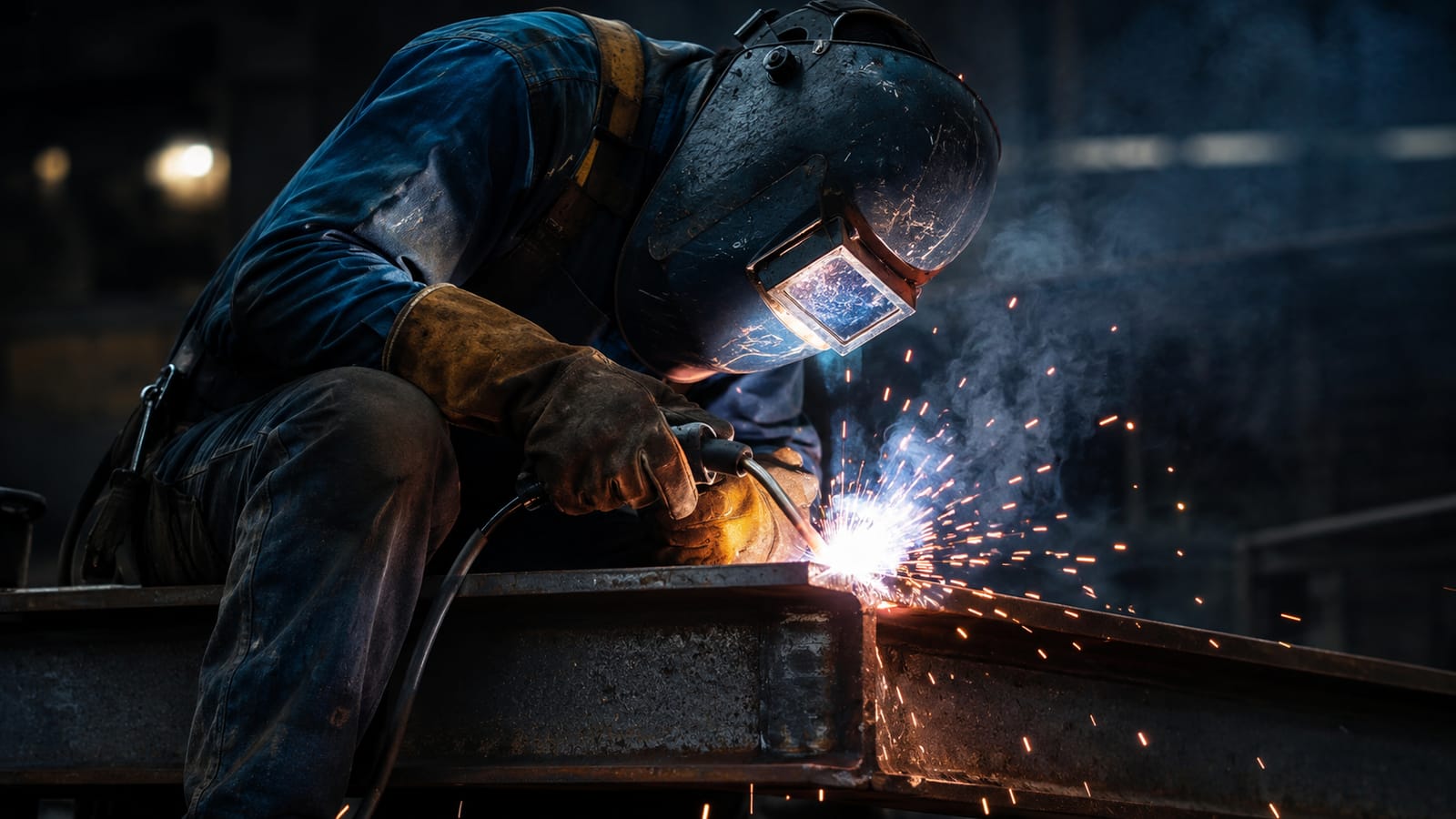
Welders carry exposure from hot work, fumes, and fabrication — the comp classification and site safety posture have to reflect that. Electricians add licensing and arc-flash risk, so credential verification isn't optional, it's part of insuring the work. Concrete crews bring their own mix of equipment, lifting, and pour-day hazards.
A specialist verifies the licenses and certifications each scope requires as part of recruiting to spec — not as an afterthought — because the credential and the insurance are two sides of the same risk question.
The comp transfer is half the story — the other half is who's actually on your site
Shifting workers' compensation to the staffing agency protects your experience-mod rating. But on dangerous-work scopes, the larger exposure is the incident itself — and that comes down to whether the tradesperson is actually qualified for the hazard in front of them.
Before anyone reaches your gate, a trades specialist verifies the safety credentials the scope demands: OSHA 10 or OSHA 30 for general site work, NFPA 70E arc-flash training for energized electrical work on electricians and substation crews, confined-space entry for vessel and tank work, and aerial or scissor-lift certification for elevated work. A generalist agency classifies a body as 'labor' and moves on; a specialist confirms the card matches the hazard — which is what keeps a comp claim from becoming an OSHA citation.
That is the difference between transferring risk on paper and lowering it on the ground — and it is the same discipline that makes the comp classification accurate in the first place.
What to confirm before you sign
Ask any agency three things: that it carries workers' compensation and general liability on the placed trades, that the comp classification matches the actual trade work, and that it verifies the licenses and certifications your scope requires.
A partner built for the trades answers all three without hesitation. Pair that with a clear scope and market-rate pay and you get crews on site the same week, often next day — from a local bench in Richmond or Charlotte — with the comp and liability exposure carried by the agency, not your project.
Frequently asked
Who is liable if a placed tradesperson is injured on my site?
When the agency is the employer of record, it carries the workers' compensation and general liability on the placed worker — so that exposure stays with the agency, not your project. Confirm the agency actually carries the coverage and classifies the trade correctly.
Why can't a general light-industrial agency staff my trades?
It may not carry or correctly classify the workers' comp and liability that high-risk trades require. Placing a welder or electrician on a warehouse comp classification leaves a gap that lands back on your project. A trades specialist insures the work for what it is.
Does the agency verify licenses and certifications?
A specialist does, as part of recruiting to your spec — confirming the state-level licenses for trades like electricians and the certifications each scope requires. Credential verification and insuring the work are two sides of the same risk.
What about general labor — can the same partner cover it?
Precision focuses on licensed and certified trades. For general light-industrial needs like warehouse and production, its sister company Lingo Staffing handles that staffing, so one relationship covers both sides of the job with each placed by the right team.
Does the staffing agency check OSHA and trade-safety certifications before a worker shows up?
A trades specialist does, as part of recruiting to spec — OSHA 10 or 30, plus the hazard-specific cards a scope requires, such as NFPA 70E arc-flash for energized electrical work, confined-space entry, and aerial or scissor-lift certification. Verifying the credential against the hazard is what keeps a comp claim from becoming an OSHA citation.
Let's staff your project.
Whether you need one electrician next week or a 20-person crew next month, we can scope it in 15 minutes.